2026 Lecture Series
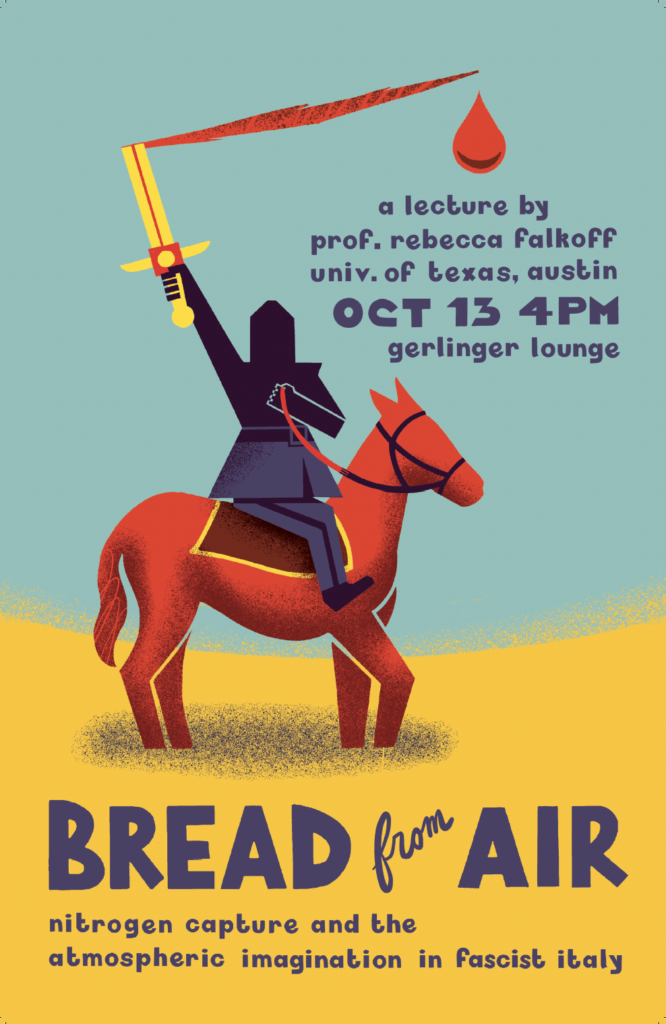
Environmental concerns – from nature conservation to air and water quality – are often associated with progressive politics. But under Fascisms past and present, ecological ideas have also animated authoritarian projects.
Nature under Nationalism
This speaker series examines how dictatorships mobilize nature as both metaphor and material resource.
"Italy must be ruralized!"
As a metaphor, agrarianism evokes Fascism’s foundational mythos: the dictator will restore the country’s glorious national past. To live a rural, old-fashioned lifestyle was to be a more patriotic citizen. “Italy must be ruralized!” proclaimed Benito Mussolini in 1927.
The limits of biological possibility
As a material resource, nature is often put to use in service of eugenics and racial hygiene. Our speakers will examine the professional biographies of the scientists, industrialists, and entrepreneurs hired by Fascist regimes to determine the limits of biological possibility.
Conservative Countrysides
Rather than treating eco-fascism as a contradiction in terms, our speakers will situate it within longer histories of environmental planning, population management, and technocratic governance. They will explain how dictatorships use the tools of authoritarian governance to modify the environment in their pursuit of more Fascist futures.

2024 Lecture Series
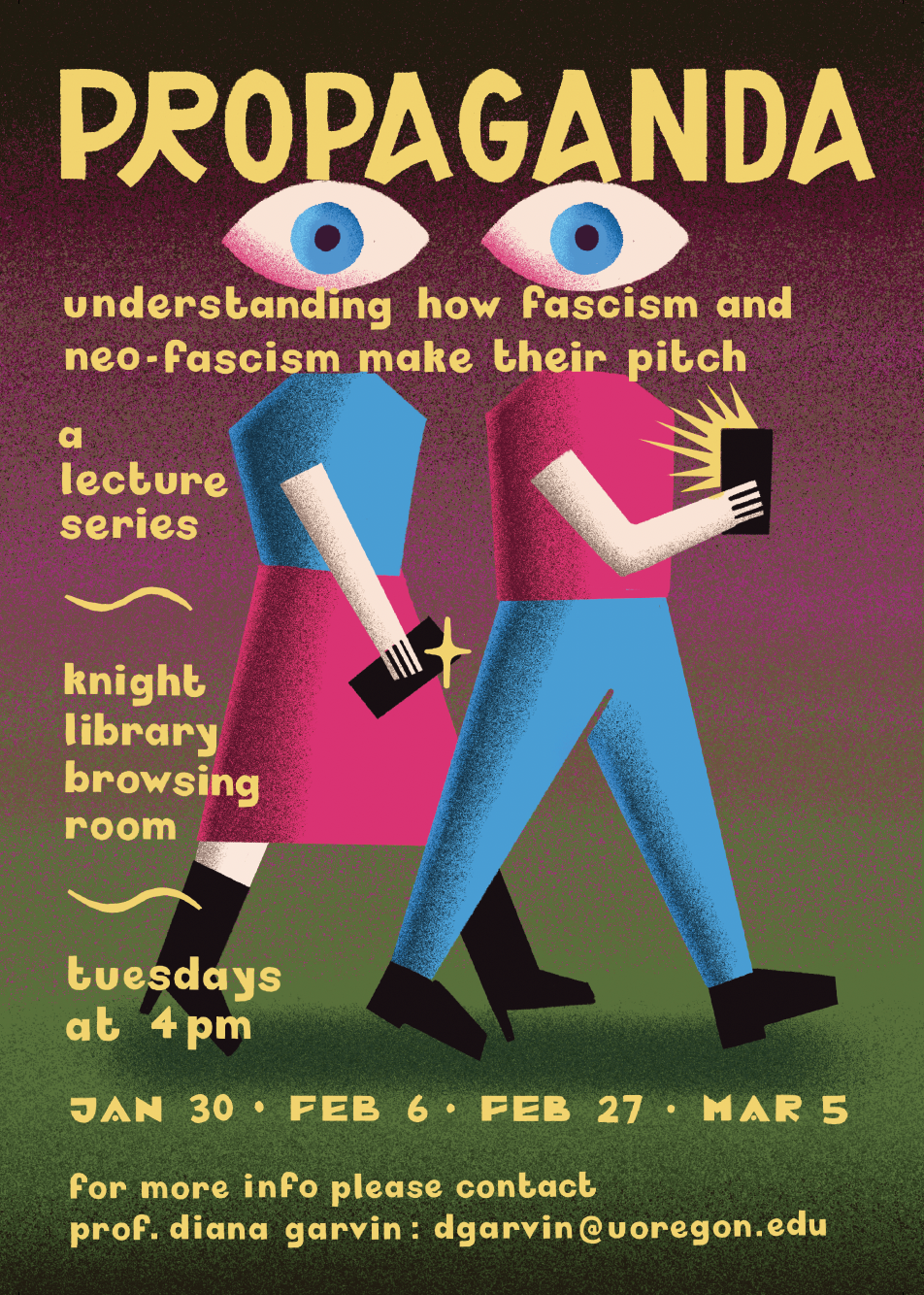
Today, the far-right deploys new kinds of propaganda, using generative AI and deep fakes, to attract new followers. Monthly talks included four scholars who study far-right propaganda to understand how it creates this total environment, and how to see through it.
Decoding Far-Right Messaging
The most powerful forms of propaganda surround voters with alternate realities.
What does it mean?
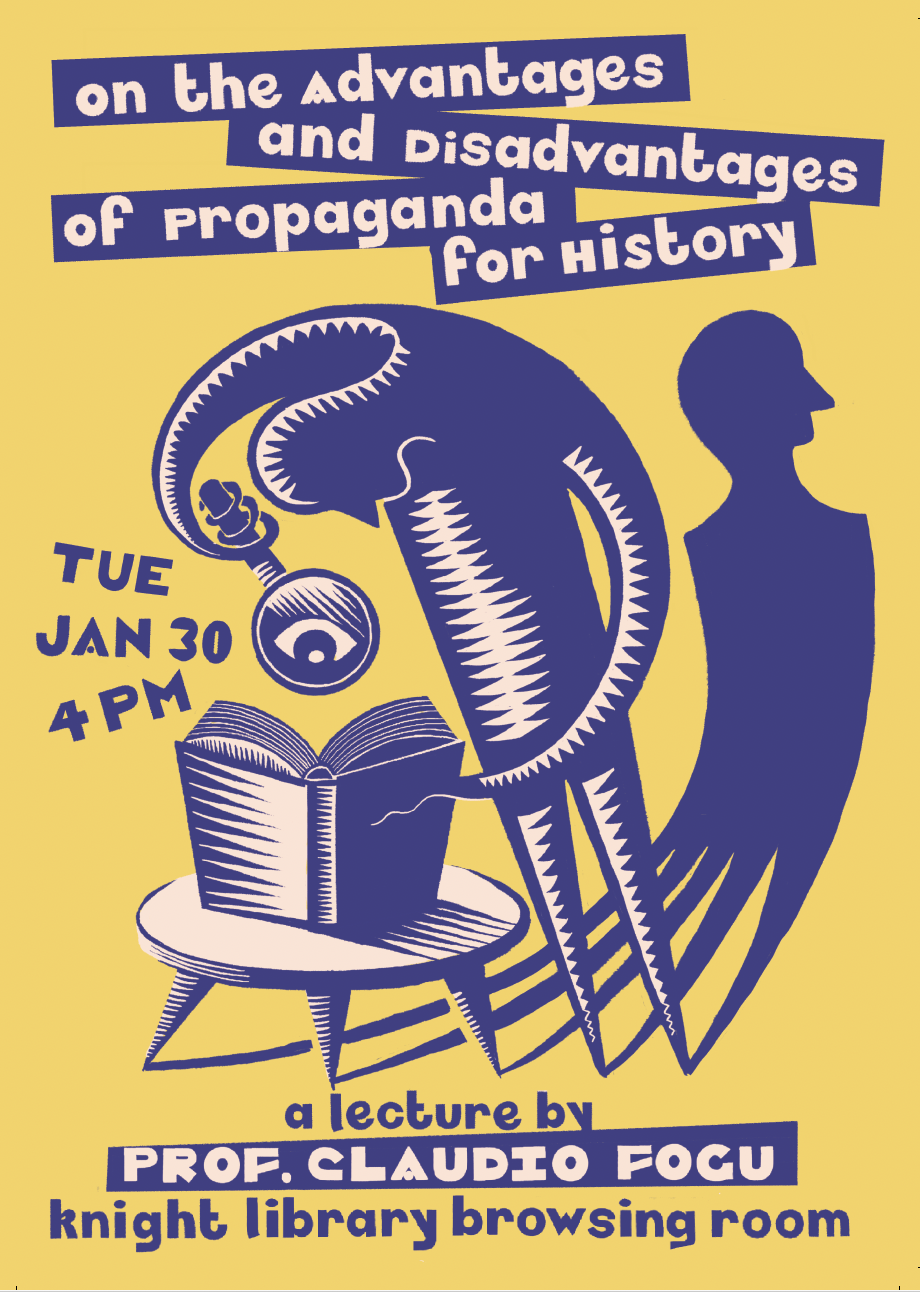
The Italian word “propaganda” originally referred to advertisements for consumer products, not political misinformation. But with the rise of the Fascism, propaganda assumed its modern definition: the marketing of politics.
Why does it matter?
Throughout Benito Mussolini’s dictatorship (1922-1945), advertising shaped autocracy, and vice-versa.
360° of Propaganda
We often think of Fascist propaganda in two dimensions, picturing posters and newsreels. But because the regime created powerful incentives for private businesses to support state dictates, propaganda included architecture, fashion, and even children’s toys.

2023 Lecture Series
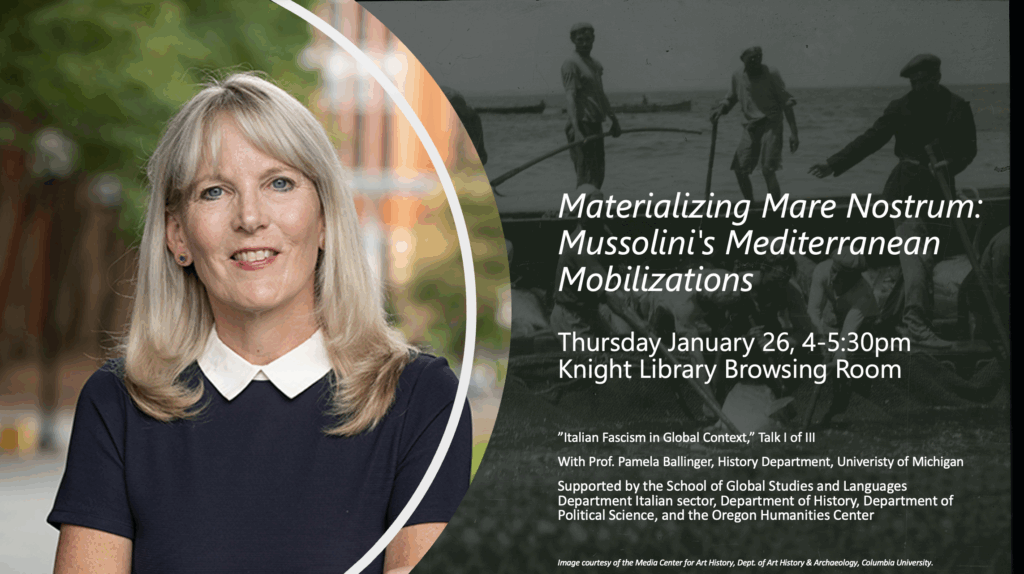
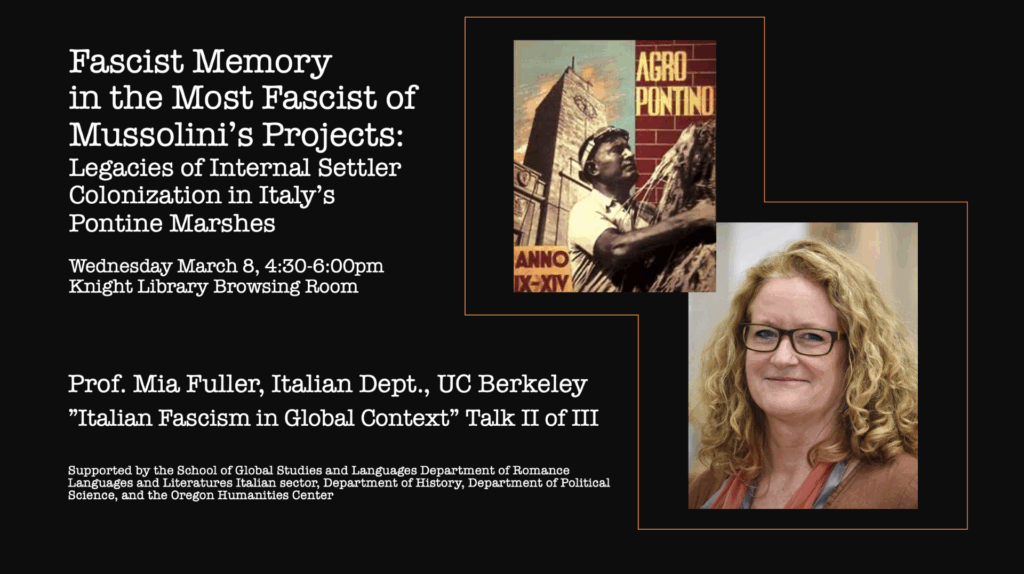
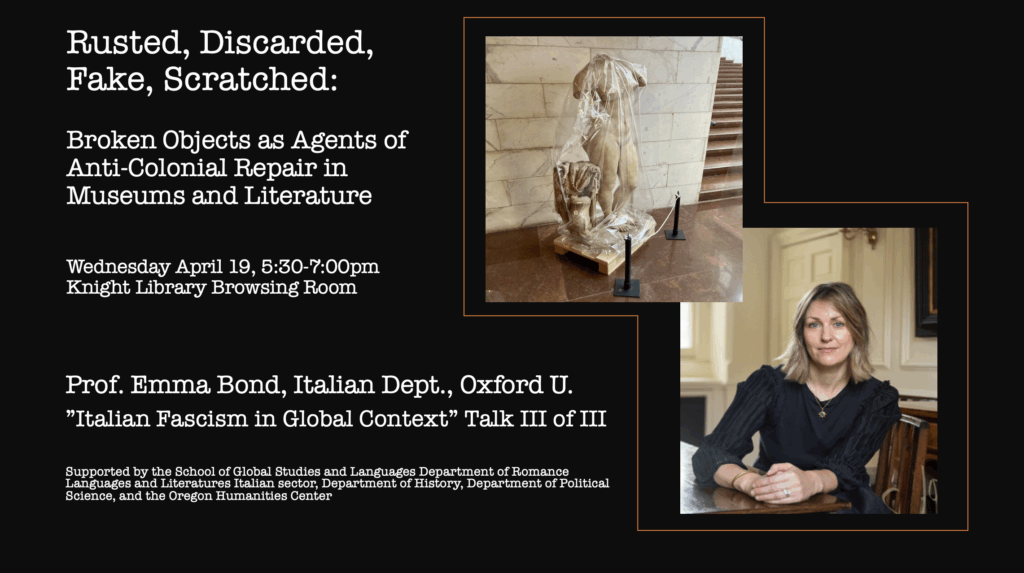
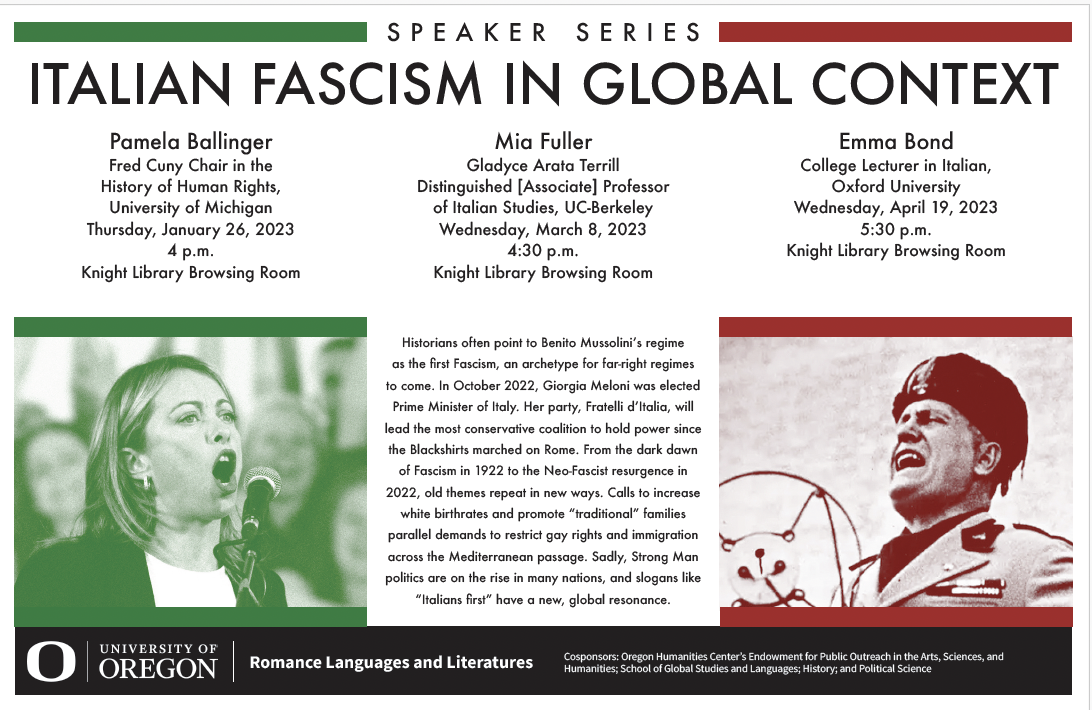
We need to understand how Fascism, of Italian origins, operates on a global stage.
Fascism across Borders
Strong Man politics are on the rise in many nations, and slogans like “Italians first” have a new, global resonance.
Italy, 1922 to 2022
Historians often point to Benito Mussolini’s regime as the first Fascism, an archetype for far-right regimes to come. In October 2022, Giorgia Meloni was elected Prime Minister of Italy. Her party, Fratelli d’Italia, will lead the most conservative coalition to hold power since the Blackshirts marched on Rome.
100 years later
Today, old themes repeat in new ways. Calls to increase white birthrates and promote “traditional” families parallel demands to restrict gay rights and immigration across the Mediterranean passage.